
6/10/2026
Wildfire Airspace: Why Unauthorized Drone Operations Force Firefighting Aircraft Down
If you operate near active wildfire zones, this matters: unauthorized drone activity directly impacts wildfire response timing, and delays in firefighting operations compound damage and risk to ground crews.
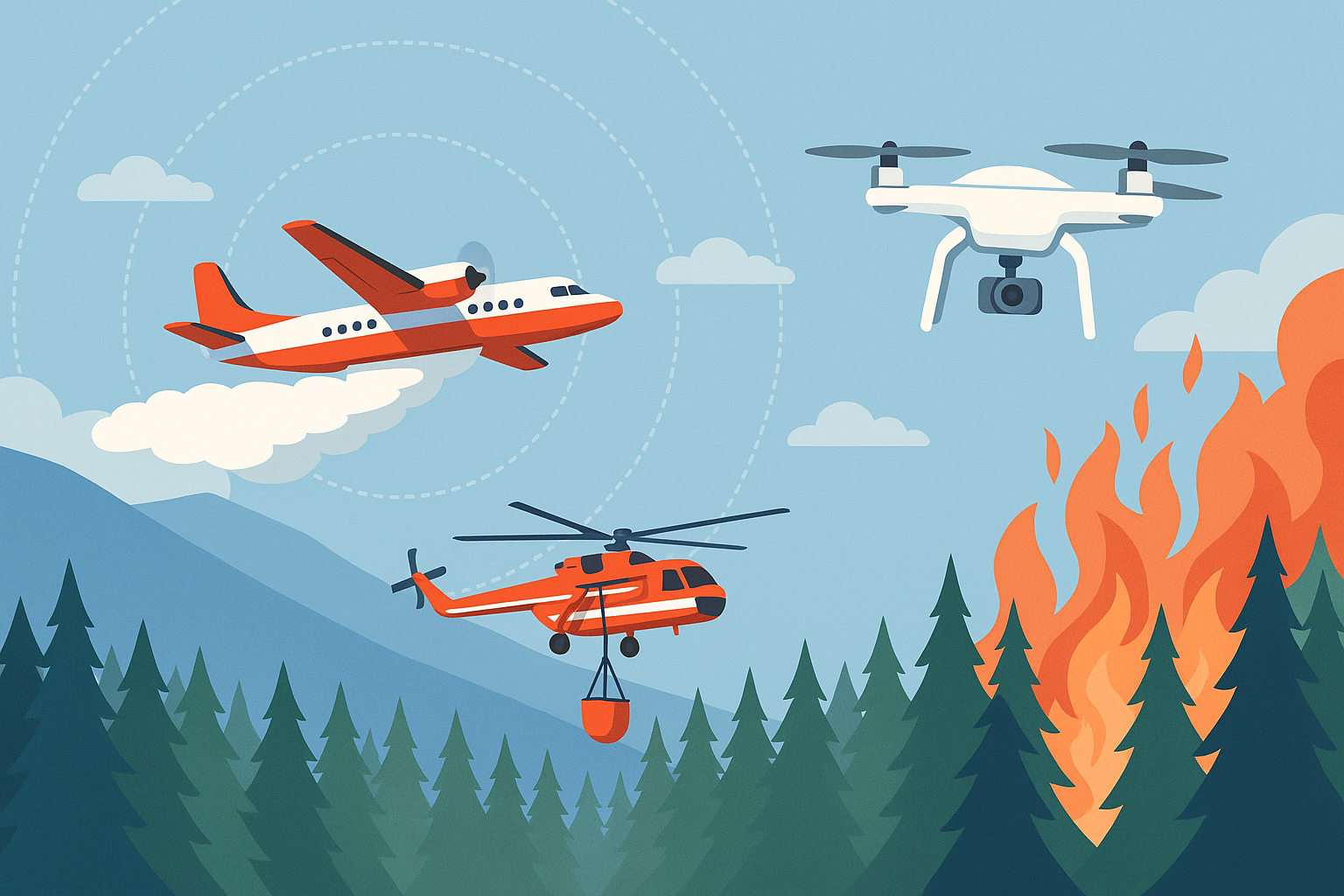
According to the US Department of Interior, unauthorized drones near wildfire activity force wildland firefighting and aviation crews to stand down. When drone operators enter fire airspace without authorization, manned firefighting aircraft must stop flying to avoid collision hazards. This is not a safety guideline; it is an operational constraint that cascades into slower response times when every second counts.
The Department emphasizes that during active wildfire operations, the presence of an unauthorized drone can force a complete halt to aerial firefighting efforts. Wildfire response coordination depends on clear airspace. A single unauthorized flight creates a hard stop for manned operations until the drone is cleared from the area.
Operators flying near wildfire activity should assume that airspace is either restricted or will become restricted on short notice. Coordination and pre-flight planning are essential. If you are unsure whether your operation is in an active fire response zone, contact local ATC or fire coordination centers before launch.
UASecure's dynamic airspace alerts would flag active or imminent fire restrictions in your pre-flight checklist. The system integrates current wildfire and airspace notices so you see conflict zones before you plan your mission, preventing the scenario where an operator inadvertently enters restricted airspace during active firefighting operations.
Posted to X. View on X